Thursday, 4 November 2021

What Really Brought the Greenwash Gang tae Glaesgae?

Mr. Johnson and his puppet-masters could have associated climate-failure with almost any of the cities in their control. Belfast and Derry were not considered but why pick on Glasgow? The detail that catches my attention is the sub-letting of Scotland’s sovereignty to the U.N. London has made an internationally witnessed claim to having complete and unquestioned mastery of the Scots and the land that once was once their’s.

Since our talk-a-good-independence representatives began their march into the cul-de-sac called devolunion we have:

had our representation at Wastemonster reduced;

had our legal system subjugated to English imperial law;

had a serious challenge to any claim that the 1707 Union did not surrender our sovereignty.

All Under One Banner and similar organisations have been doing a good job. It is not enough to stop the rot. Constitutional affairs cannot be entrusted to politicians.

What constitutional insult are the neighbours planning next? Charles III of Greater England is currently having his media profile air-brushed and enhanced. In 1993 we briefly held the initiative and they were confused. We cannot just react to their provocations or accept their manipulations. There can be no nation without leadership.

Tuesday, 12 October 2021

A School for Royalty

 During the first covid-winter I was re-reading a work that has been in the family library for more than forty years. Somehow my eyes were drawn to the name of the author, Mansur Darlington. I had opened this book on many occasions but that name had never registered before. Was there not a Mansur Darlington, elder brother of James, at Saint Christopher School?

Mansur Darlington's contribution to the Haynes manual-series covers many different models. It is well-written and it explains the important changes in specification.


St. Christopher School had its fair share of unusual names. However this one would not have been entirely alien to some of the vegetarian students. Al-Mansur is the arabic for 'the victorious'. This title was used by the second 'Abbasid Caliph (754-75); the founder of Baghdad. It would not have seemed an unusual name to his descendant Dina Abbas.

I can recall the hierarchy making a fuss of Dina and it seemed out of character at the time. Years later I heard a tale of Dina being chauffeur-driven in a Palestinian Embassy limousine. By that time I had filled in some of the gaps in my understanding of the religions of the world. I finally grasped that I had been at school with a member of the Holy Prophet's uncle 'Abbas' family. One of Sunni Islam's nearest equivalents to a royal family.

The only other muslim kids at St. Chris at that time were the Shah siblings, Vijay and Mina. By a strange coincidence that same covid-winter brought a radio report where a Republican Party Spin-Doctor was trying to lead the story away from Donald Trump. It was the spin-doctor's name that caught my attention, Mina Shah.

Vijay and Dina must have been close to the same age. I do not recall any great warmth between the Shahs and Dina. If the Shah kids came from the followers of 'Ali, the Shia, they would have considered Dina's family to be illegitimate and opportunistic claimants to the succession or caliphate. Then again the Persian word shah can be translated into English as 'king'. It may have been that the Shah siblings felt themselves to be at least the dynastic equals of any of the 'Abbas clan.

When the public libraries re-opened I was able to put 'Mina Shah Republican Party' into the box-of-tricks. Sure enough, there was a beautiful and elegant woman who might very well be a later edition of the girl I went to school with.

Mina Shah, Republican Party Spin-Doctor. Is this the same Mina Shah who had her understanding of democracy distorted at St. Christopher School?


The Muslim minority did not have a monopoly on regal pedigrees at St. Chris. The O'Mahoney sisters bore the name of Ireland's most important royal dynasty; the family of Brian Boru (941-1014). The O'Neills represented another royal line. The Moore's reflected a lesser Irish dynasty; though they pretended to be English.

The Scots also contributed to the regal ambiance. Margaret Stewart bore the name of Scotland's best-known royal dynasty; distant cousins of the Clan Windsor. The Mair brothers were connected to the Mormairs of Moray. In an earlier, Welsh-speaking, era these Mormairs were Kings of the Northern Picts.

The English could claim that they had an Art Teacher who was a king of his trade. They did have another claim to genuine nobility. Anthony Wolesely-Wilmsen taught me, at the age of 12, the little that I know about the theory of how the City of London is supposed to work. I did not admire Anthony because he was the only boy in the class who wore a tie to school. My sincere respect was for the understated, diplomatic disdain that he clearly expressed for the entire muddle-class and their fellow-travellers.

Years later I learned that Anthony had quit a job as a Merchant Bankster. This seemed to confirm my earlier positive estimation of his character. He would not have told them to get somebody else to launder their drug-money but I would guess that he may have been thinking such thoughts. Anthony (or Don Antonio) is now a published author.

I have not, as yet, read this work but I hold the author in high esteem.

He was living in Paraguay the last time I put his unusual name into the box of tricks. Anthony is an aristocrat in all the best senses of the word but he had no claim on royalty.

Which only leaves that creepy individual who added “King-” to his name to spin away from his Scottish origins. If only I had the literary and diplomatic skills to write his biography ...


Thursday, 19 August 2021

Can the Scots Really Understand the Evils of Imperialism?


The island of Jamaica has been portrayed to us as a tropical paradise. Happy, smiling black people are allowed to sing a chorus of “White folks been awful good to me.”;1 where they have a role in this imperial fantasy.

Xamaica, the Land of Springs, became a Spanish colony in the sixteenth century. The native Tainos or Arawaks spoke the same language as the Tainos on Cuba and Hispaniola. Under Spanish Imperial Law it was forbidden to enslave the natives. As with many things in imperialism this was propaganda and the actual practice was very different. There are no written records of Jamaican Tainos being rounded up and shipped to Cuba and Hispaniola; that would have been illegal.

There may possibly be a written record of Jamaican Tainos risking their lives to try to warn the Maya on the mainland of the threat from imperialism. The story of a canoe voyage from Las Islas Palizadas, on Jamaica’s south coast to the Yucatan Peninsula is told in History of the Conquest of Mexico.2

By 1655 the Jamaican Tainos had been fully assimilated by imperialism. Their memory had a place in history but it was more easily accessible in the mythology of the new Jamaicans. Their language was no longer heard in the Land of Springs. “... the end of a lang sang.”3


Jamaica's coat-of-arms shows fanciful representations of two Tainos; mis-leading images enslaved by an artist's brush.


In 1655 Jamaica acquired a new owner; a benign, enlightened owner; if you believe the propaganda. The English took over from the Spanish. England and Greater England (Scotland and Ireland) were under the benign and benevolent dictatorship of Oliver Cromwell. Seeking to bring the benefits of English civilisation to the entire Spanish Empire, Cromwell sent a large military force to the West Indies. This expensive expedition heroically wrested Jamaica from the embrace of the wicked Catholics. In 1655 Jamaica entered the English family of nations; a thoroughly dysfunctional and unhappy family.

In 1657 Cromwell's man in Jamaica formally invited 'The Brethren of the Coast' to establish their version of free-trade in Port Royal. These unsavoury characters have a somewhat sketchy historical profile. They were pirates to the Spanish whose shipping they preyed upon. Their most famous leader, Henry Morgan, was described as being Welsh. In the English of Wessex (the West Country) 'wales' means foreign. The designation of Welsh is open to interpretation and the name of Morgan is not unknown in the Scottish province of Buchan. Piracy was a well-established trade in Buchan long before Cromwell's time.

The English preferred to describe their pirates as privateers and also as buccaneers. The origin of this latter term is uncertain. If the Buchan free-traders had compounded the name of their province of origin with their privateering trade they might well have called themselves buchaneers. Deliberately mis-pronouncing every language (especially their own) seems to be a symptom of the imperial disease. From buchaneer to buccaneer is a linguistically simple sound-change. The alternative explanation is more complex.

In 1707 the English state underwent a fundamental re-organisation when it formed a federal union with the state of Scotland; henceforth to be known as Great Britain. In Jamaica the English imperial flag was embellished with a few patches of blue to become the Brenglish imperial flag. On the mainland the Spanish robbed and enslaved the Native Americans. From Port Royal Scottish pirates under an arms-length English/Brenglish administration robbed and murdered the Spanish. If you look closely at the spectacular ruins that are left by empires you will find that they are stained with blood and cemented by despair.
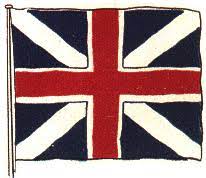
The 1707 Brenglish imperial flag is constitutionally related to a state called Great Britain.


Concentration camps are generally thought to date from the 1860s. Their invention is credited either to the 'bad Spanish' empire in Cuba or to the benign, enlightened “Brutish Empire” 4, under great provocation, as a temporary measure, in Natal and Orange Free State, during the Boer War (1899-1902). Many Jamaicans believe that the first concentration camp was the island of Jamaica. At 100 miles by 50 miles it was also the largest.

The first African slaves in Jamaica were imported by the Spanish. Their descendants are the Maroons (from Cimarrones) of Jamaica's semi-desert interior. The English initially preferred to use people they described as bonded-servants to do the kind of ”Carry Go Bring Come”5 tasks that are beneath the dignity of imperialists. These people were from diverse backgrounds and anyone could volunteer for bonded-servitude which is also known as indentured-service. In reality bonded-servitude, a form of slavery 6, was used by deep-soothers to thin out the Celtic over-population of the north and west of England and other barbaric parts of 'ouwa islands'. They were really doing them a favour as they were incapable of supporting themselves; or so they said.

Many bonded-servants died on the passage to their new home on the Island of Springs. Once they arrived they were hard-working and cheap to keep. They had a bad habit of dying from tropical diseases; probably made more deadly by malnourishment and despair. By the end of their seven or eleven year bonds they were thoroughly acclimatised, addicted to rum and ready to join the pool of cheap labour in their new home. That was true for some but many had been promised that the bond-holder would pay for their passage home if they should survive their period of bonded-servitude. How convenient for the bond-holders if their servants should succumb to the effects of over-work, brutality and mal-nourishment shortly before the period of bondage was due to end. In this crucial detail the bonded-servants were in a worse position than the African slaves who were to replace them as the lowest strata of the English imperial class-system.

Although the use of Celtic slaves had many advantages in the building of England's tropical paradise, there were also many disadvantages. The high mortality rate was a serious drawback, many of them didn't live long enough to repay the cost of shipping. Wouldn't it be enlightened and inspired if we were to breed a race of servile people who had the meek and fatalistic qualities of the Celts combined with the psychological toughness and resistance to tropical diseases of West Africans?

Ideas of this type were not entirely good news for the Celts but they were certainly bad news for some of the peace-loving nations of West Africa. English domination of shipping and the West African trading-posts allowed them to control the supply of African slaves to their American colonies. Jamaica became a sorting-office for this lucrative trade. The Celts still had a place in the imperial plan. They became the plantation underseers who taught the Africans how to be productive members of an enlightened, christian empire. The Celts were still slaves (though one should not say so to their face) but they had now moved up one class in the imperial plan.

The task of turning the new recruits to the imperial plan into a productive and profitable work-force was complex. They had to be persuaded to give up their languages, cultural beliefs and sense of values. In return they were given a place in the civilised world of English-speaking imperialism; and a new name! Some Africans went along with 'cultural assimilation' while others resisted. The more humble and co-operative blacks tended to be considered ideal for onward shipping to other markets, including the American colonies. The selective-breeding programme in Jamaica, probably without realising it, was selecting for a rebellious, culturally-confident lower class of Jamaicans.

When, in 1776, a small group of trouble-makers temporarily withdrew the American colonies from the 'family of nations' the ever-patient mother-country still controlled all the shipping and access to foreign trade. There followed (until 1812) a period of benign and enlightened guidance to steer the American renegades back to the right course. The shipping of assimilated Africans from Jamaica continued for many years. At least 160,000 Africans were thus trans-shipped through Jamaica.7

The moral depravity inherent in this sad tale is difficult to evaluate; impossible to understand. The achievements of the Nazi regime in Greater Germany lasted for 5½ years. The imperial regimes in Jamaica lasted for 400 years; “400 years of the same philosophy”8. They have left a moral and cultural legacy that causes Jamaica to stand out among all the small nations of the world. Jamaican contributions to world music and track athletics are out of all proportion to the small size of the island's population.

The Celts, many of them Scots, who were caught up in this holocaust have contributed to the island's rich and restless heritage. Jamaica's flag is a saltire flag. Many Jamaicans have Scottish surnames. There are still communities on the island who see themselves as being of Scottish extraction9. Much of the power in the lyrics of Jamaican popular songs comes from their understanding of the evils of imperialism. Peter Tosh (Mackingtosh), Justin Hines (Innes), Bunny Wailer (Livingstone) and Prince Buster (Campbell) all make worthy attempts to describe and evaluate the imperial wasteland. The Honourable Marcus Garvey10, Jamaica's national hero, ranks alongside The Holy Prophet Mohammed in his contribution to shaping African cultural identity.


"My coat is Scottish, my name is Irish but I am an African." Marcus Mosiah Garvey 1887-1940

The problem the Scots need to overcome is that they are too close to the trees to see the wood. The empire that tortured and tormented 26-counties-Ireland for seven hundred years has broken and ignored the spirit and the letter of the 1707 Treaty of Union. In 1973 when Scotland, willingly, entered the European Union our legal system was not subordinate to a Brenglish High Court. There is no moral or legal reason why we should accept subjugation to English Law today.

The Empire-Loyalists who claim to be 'Unionists' will have a template for federalism; if they ever bother to read the 1707 Treaty. They could campaign in a positive way for the opening of The Scottish Exchequer; a provision of the Treaty. The oral propaganda that was the context for the signing of the 1707 Treaty is, in Scots Law, something they could bring before the courts. True Unionists, if they were serious, would be campaigning for the closure of the English Parliament and the, long-delayed, opening of the British Parliament, in York.

The talk-a-good-independence-at-election-time factions get a good press from the imperialists. They have set themselves up to repeat the history of the talk-a-good-socialism-at-election-time faction. If we are to have years to wait for the next step they should be years of planning, organising and hard work. The Americans, the Irish and the Jamaicans all gained their independence from the same evil empire. If you think it was easy you are not fit to live in a sovereign state.


REFERENCES

1 Harriet Beecher Stowe; Uncle Tom's Cabin;

2 Bernal Diaz del Castillo; History of the Conquest of Mexico; many translations; look for Yucatan Peninsula in the index

3 “That is the end of a lang sang”, was a contemporary comment on the 1707 Treaty of Union. I associate it with Fletcher of Saltoun but can find no reliable confirmation of this.

4 Stokely Carmicheal; attribution from Mark Kurlansky; Nonviolence 25 Lessons from ...; Random House; 2006; p. 169

5 Justin Hines (aka Justin Hinds); Carry Go Bring Come; Island Records; 196?

6 Eric E. Williams; Capitalism and Slavery; 1944

7 C. E. Long manuscripts; official records of human-trafficking into and out of Jamaica from 1702 to 1787; published by, Jamaica Family Search

8 Peter Tosh; 400 Years; Blue Mountain Music Ltd;

9 Ian Thomson; The Dead Yard;

10 Stanley Nelson; Look for me in the Whirlwind; Firelight Media; U.S.A. 2000

Amy Jacques Garvey; Garvey and Garveyism; 1935

Féderico García Lorca; The King of Harlem (Poet in New York); many translations; first published in 1940 as El Rey de Harlem


Monday, 21 October 2019

Barriers in the Sea


I find it strange that the media are discussing the idea of a customs barrier in the Irish Sea as though it was something new and completely unprecedented. Our partner in the 1707 Union, the Parliament of England, has operated a customs barrier in the North Sea and the North Atlantic for many years. I am referring to the customs barrier that separates Scotland from an area known as the United Kingdom Continental Shelf.
Every worker or piece of equipment that makes the journey from Scotland to an oilfield installation off our coast, crosses this customs barrier at the 12-mile-limit. Workers carry passports and equipment clears customs as it leaves (or enters) Scotland.
Our partner in union traded away the “expendable” fishing grounds but they are keen to retain control over the oilfields. Their misuse of the term ‘United Kingdom’ has become so routine that it is perceived as being an ancient usage. Yet it has only become fashionable in the past half-century. The name of the 1707 Union as a federal state was and is Great Britain. It is a state composed of two nations and the Duchy of Cornwall. Wales was incorporated into England by military conquest a long time ago.
England’s attempts to subdue and incorporate the entire island of Ireland (Lesser Britain to geographers) have proved to be a deferred success. These imperial adventures gave rise to the 1801 Union and the name of United Kingdom of Great Britain and Ireland. This was abbreviated to ‘Great Britain’ or ‘Britain’ until the 1970s. The 1801 Union was a fraud entered into by the ‘Parliament of England’ and a colonial ‘Parliament of Ireland’. The treaty is drafted so as to be in clear breach of the 1707 Union which constituted a single Parliament of Great Britain.

The 1707 Union Flag

If we are to proceed towards a meaningful and stable independence we will need to know who we are negotiating with. We will need to know who the competent parties to the negotiations are. We must try to set out our stall so as to make the terms and conditions that end the 1707 Union difficult for our former partner to wilfully ignore or imaginatively misrepresent.
If we stick to the two equal states model of the 1707 Union things will be complex enough. If we admit any little Englander fantasies such as the ‘Rest of the United Kingdom’ we could open the door to a Welsh solution. The Old English word ‘wales’ means ‘foreigner’. If Scotland shoulders an equitable and agreed proportion of the debts of Great Britain we would be taking a first shaky step towards a more dignified and adult future.
If Scotland takes on a fair share of Great Britain’s debts and liabilities we underline our moral and legal claim on the assets and equity of Great Britain. This seems to me to be essential if we truly aspire to take on the tricky business of recovering from the Darien Disaster. By claiming stewardship of the Parthenon Stones, The Malvinas, Gibraltar and Albania’s gold we would announce to the world that we are serious.

Image result for european union flag image
The European Union Flag in October 2019

It is to be hoped that the continuing state of England would see the wisdom in returning to us the Book of Deer, the Burghead Bull and the Cutty Sark. However that would be up to them. If they really wanted to make a pacific gesture there are Berwick and Cumberland to consider. They might offer to take the old nuclear submarines away from Rosyth; but I’m not holding my breath about that.
Another approach to our resumption of all the outward trappings of sovereignty would be to start at the top. If we revoked the 1603 Union of the Crowns the constitutional muddy water becomes much clearer. We could then lay claim to the Koh-i-Noor diamonds. The fake coronation stone would, of course, be returned to us under a treaty obligation from auld lang syne. If our former partner was being level-headed and well-intentioned they might also return the Bishop’s Chair that was stolen from Scone Palace. But I’m not holding my breath about that.

Wednesday, 20 March 2019

Re-constructing our Identity

We cannot with any certainty claim to be Europe's oldest nation. Yet we have as good a claim as the Welsh or the Irish. Perhaps the Basques or the Same were here first; it was a long time ago. We can take a collective pride in being one of the two European countries that have never indulged in pogroms aimed at the Hebrew community.

More recently we have tended to take an anti-Zionist stance. The Palestinian nation have struck a chord with us in their long exposure to the brutality of the Zio-nazis. It is regrettable that our current state of constitutional castration reduces our sympathy to the meaningless gesture level. Our meek acceptance of what has degenerated into colonial rule has silenced our voice in the wider world.

It is easy to moan about it; but more uplifting to consider what might be done to re-assert the value of what we have learned in our long history. Civilisation in Northern Europe has left some enduring monuments on the Orkney Islands. The building of the Brodgar/Stenness spiritual landscape was a prototype for the spiritual landscape that was subsequently created in the south-west of Great Britain. The Battle of Moytura records that: "The Artistic People (Tuatha de Danann) were in the northern islands ..."

The written records that have survived from auld lang syne have a distinctive style and they are firmly based on a tradition of highly educated poets. They are open to a variety of interpretations. If we are to gain confidence in our own abilities it is our own interpretations of the sources that are important.

The Kingdome of Scotland 1662, John Speed
© Crown Copyright 1982

In an Irish epic of uncertain date, the Hound of Cooley (Cú Chulainn) is sent as a young man to Scotland to learn the use of arms from a woman. The story very clearly identifies the exact castle in Scotland to which the hero eventually gains entry. There is hard factual information in these old tales, if you have the ability to tease it out.

Abbot Linton's literary masterpiece was the prototype for the American Declaration of Independence; we have come to call it The Declaration of Arbroath. You can see some of the good Abbot's flowery language as mere window-dressing. He was certainly not the only Celtic Holy-Willie to use flattery in addressing the Bishop of Rome. That this approach was effective stresses the banality and worldliness of God's self-appointed Number-One Bag Carrier.

The good Abbot's history of the Scots might seem like a nonsense tale. Yet it has a clear, hard-edged content. Abbot Linton associates our nation with a historical period before the creation of the Roman Church (294 CE). He clearly gives our christianity a direct link to St. Andrew that is independent of Roman distortions.

Can any of this ancient history help us to see a way to approach our current dilemmas with optimism? One alternative to fixing and overhauling our cultural inheritance could be to start again from scratch. That would invite internal division which would be ruthlessly exploited by the fearties. Leaving out the fearty desire to submit to "chains and slaverie!", you have to look at rebuilding the "auld sang" on the foundations of what went before.

We are looking to take our place in the North Atlantic and build the friendships and alliances that will enhance the peace and security of the region. We have clear cultural and historical ties with Ireland and Norway. We also share mutual interests with Iceland and Denmark.

To police our own long coastline we will need to generate the economic surplus to finance two flotillas of inshore submarines. One for the east coast and one for the west coast. This implies the need for training our navy in a challenging environment. The Norwegian Navy are the best in this inherently dangerous business. We would have to offer Norway something of substance to seal a deal. That it could lead to co-operation in maritime reconnaissance and deep-water boats would be to our mutual benefit.

Norway's influence and economic success were enhanced by their oilfield wealth. Yet they were a very poor colony of Sweden until 1905. Their current success is linked to Peer Gynt but also to a written constitution that has served them well. A translation of the Norwegian Constitution into Scots would be a worthy project for those with the skills.

The rest of us can consider updating and overhauling the Declaration of 1320. Which finally brings me to my point: it will soon be the 700th anniversary year for Abbot Linton's letter. How best to celebrate that written statement of our collective identity?

For my bawbee's worth I would humbly submit that a revised Declaration should preclude any outside employment by the Monarch. We should make it clear that in future we shall require the Monarch of Scots to accept their post as a full-time job and to relinquish all other employment.

Bibliography
Blamires, Steve; The Irish Celtic Magical Tradition; Harper Collins, London; 1992

References
Burns, Robert; Scots Wha Hae;
Seafield, the Earl of;

Saturday, 7 April 2018

Fattie & The Bairn; What will we learn from past mistakes?


In 1976 Alex Harvey sang about The Boston Tea Party. There was a clear reference to our constitutional aspirations. The 7:84 Theatre Company were looking at our history from our own perspective. Jack Bruce, the creative talent in Cream, was back hame in his ain countrie. There was an air of expectation. To be of lasting value the arts must reflect experience and challenge the silent majority.

In the grubby world of politics Willie Wolfe and Gordon Wilson were given a rough ride by the alien press; as you would expect. They seem to have been genuine leaders of an independence movement that was expected by many to achieve much.

In Paul Theroux’s Dark Star Safari the great travel writer quotes an imperial auxiliary called Uncle V.S.: “Empires do not lie they simply elide”, or words to that effect. It was during the sixties and seventies that the Brenglish Empire elided our oilfields out of the territorial and constitutional jurisdiction that we call Scotland. This loss of sovereignty does not feature in the stunted and deformed discourse that is tolerated by our imperial masters.

When artistic endeavour is over-shadowed by imperial brutality the stories cannot be told in an easily accessible format. Many critics have compared the stories of The New Testament with the stories in Josephus’ The Jewish War. They are accounts of the same historical period, the same places, the same people. The accounts were written in a totalitarian world that had no tolerance for dissent. They are great literature but the intersection of The New Testament and The Jewish War is an empty set. The two accounts seem, on the face of it, to have beamed down from different star-ships.

If any keen young historians wish to test my hypothesis on imperial censorship, they might care to research a third commentator on the same period. Tacitus wrote an account of a ‘Swordsman’ who suffered a humiliating defeat at the hands of a ‘Farmer’. The characters are better known as Calgacus and Agricola. To a totalitarian creed of a master-race it is inadmissible that a farmer should defeat a swordsman. They were clearly of different social classes. Even if it did happen, a responsible writer would elide the names so as to restore order and discipline to the world.

Just suppose, o ye historians of this poor little colony, that Tacitus was writing an allegory, in a way that would be understood by his contemporaries but would not be rewarded by a trip to the lion’s den. Just suppose that the events in Agricola took place on the eastern, and not the western, edge of the empire. Just consider that there are clear hints of the Emperor Vespasian, the hero of Josephus, in Tacitus’ Agricola. Can the battlefield for Mons Graupius be located by reference to The Jewish War?

I can think of only two men of the twentieth century who may have had something of the prophet in them. I mean no disrespect to The Last Messenger, may God grant him peace. One of the voices of the twentieth century whose honour has increased with hindsight is Marcus Garvey. Garvey famously said: “A people without the knowledge of their past history, origin and culture is like a tree without roots.”
Image result for Marcus Garvey free to use image


What should these words mean to the Scots? Our history begins with the great stone monuments of Orkney. Yet the strange anomaly of Mons Graupius, a battle without a battlefield, is used by our enemies to skew the whole historical perspective. If you question Tacitus you might go on to question Bede. We should be trying to match the written sources to the archaeological record. Our overseers will continue, for as long as we permit them, to tell us of defeat, dependence and devolunion.

The other great voice of the twentieth century said: “The Revolution winnae faa intil yer haan like a ripe aipull. Yi mun mak it haapen!” Though to be fair to Che Guevara he said it in Spanish. Che’s revolutionary adventures were a bit of a catalogue of well-intentioned fiascos. The exception was Fidel and Raul Castro’s well-publicised and well-financed Cuban Revolution.
Image result for che guevara images
© quotefancy

The importance of Che Guevara’s example for us is his clarity of vision. Despite his privileged background he won the internal struggle within his own mind before moving on to influence others. Che took the personal responsibility for plucking his own apple from the tree of knowledge. “Nothing on airth enduris bot fame”, as they say in Inverurie.


In 1707 we retained control of all the important powers, levers and structures of a nation-state. The Kirk included social security, popular entertainment and much more. Our legal system included enforcement of law and the collection of taxes. The Scottish Exchequer exists in constitutional law, though it was illegally elided out of the deal by the Brenglish on both sides of the border. The education system in 1707 even had a couple of its own M.P.s. It regulated professions and put knowledge to work to defend our customs and ideals.

By contrast the smoke and the mirrors of devolunion are supported by all the imperialists, from raging to closet; the imperialists who suck the soul from our nation. When Norway voted for independence from the Swedish Empire it was a very poor country. What it had was a belief in itself and a clear vision of what constitutes a self-reliant community. There was no half-baked scheme to entrust their gold reserves to the Swedes. There was no time-share monarch, to be the servant of two masters. The Norwegians voted for a known constitution and then put in the hard work and sacrifice that builds a nation.

When the history of our times is considered by a generation as yet unborn they may well puzzle over Brexit. The sudden out-pouring of well-financed and carefully-polished lies must surely have had some purpose? Might it have been that the imperialists feared that bad-european-regulations widnae thole the protestant succession? The European courts would have been unlikely to rubber-stamp the blatant anti-Catholicism at the heart of the Brenglish monarchy. Have they sacrificed the economic security of the many over the aristocratic obsession with a family of their choice being closer to God than the rest of us? These ideas have no place in the constitution of Europe’s oldest nation-state. Just read the written exert from our oral constitution that is entitled: The Declaration of Arbroath.

Our opportunity to start a new verse of an auld sang canna be far awa. “Bigg thy hoose upon a rock.” We need to advertise our nation’s requirement for a monarch; a King, Quine or other gender of Scots.

“Even a great nation may fall, but only a contemptible one can be destroyed”; Staniswuf Stushits.

Bibliography
Josephus; The Jewish War; 1981; Penguin, London.
Linton, Abbot; The Declaration of Arbroath; 1320; Arbroath.
Sax, Jamie (ed); The Holy Bible; 160-;
Tacitus; Agricola;
Theroux, Paul; Dark Star Safari;
Zamoyski, Adam; Poland, a history;