Showing posts with label The Declaration of Arbroath. Show all posts

Wednesday, 20 March 2019

Re-constructing our Identity

We cannot with any certainty claim to be Europe's oldest nation. Yet we have as good a claim as the Welsh or the Irish. Perhaps the Basques or the Same were here first; it was a long time ago. We can take a collective pride in being one of the two European countries that have never indulged in pogroms aimed at the Hebrew community.

More recently we have tended to take an anti-Zionist stance. The Palestinian nation have struck a chord with us in their long exposure to the brutality of the Zio-nazis. It is regrettable that our current state of constitutional castration reduces our sympathy to the meaningless gesture level. Our meek acceptance of what has degenerated into colonial rule has silenced our voice in the wider world.

It is easy to moan about it; but more uplifting to consider what might be done to re-assert the value of what we have learned in our long history. Civilisation in Northern Europe has left some enduring monuments on the Orkney Islands. The building of the Brodgar/Stenness spiritual landscape was a prototype for the spiritual landscape that was subsequently created in the south-west of Great Britain. The Battle of Moytura records that: "The Artistic People (Tuatha de Danann) were in the northern islands ..."

The written records that have survived from auld lang syne have a distinctive style and they are firmly based on a tradition of highly educated poets. They are open to a variety of interpretations. If we are to gain confidence in our own abilities it is our own interpretations of the sources that are important.

The Kingdome of Scotland 1662, John Speed
© Crown Copyright 1982

In an Irish epic of uncertain date, the Hound of Cooley (CĂș Chulainn) is sent as a young man to Scotland to learn the use of arms from a woman. The story very clearly identifies the exact castle in Scotland to which the hero eventually gains entry. There is hard factual information in these old tales, if you have the ability to tease it out.

Abbot Linton's literary masterpiece was the prototype for the American Declaration of Independence; we have come to call it The Declaration of Arbroath. You can see some of the good Abbot's flowery language as mere window-dressing. He was certainly not the only Celtic Holy-Willie to use flattery in addressing the Bishop of Rome. That this approach was effective stresses the banality and worldliness of God's self-appointed Number-One Bag Carrier.

The good Abbot's history of the Scots might seem like a nonsense tale. Yet it has a clear, hard-edged content. Abbot Linton associates our nation with a historical period before the creation of the Roman Church (294 CE). He clearly gives our christianity a direct link to St. Andrew that is independent of Roman distortions.

Can any of this ancient history help us to see a way to approach our current dilemmas with optimism? One alternative to fixing and overhauling our cultural inheritance could be to start again from scratch. That would invite internal division which would be ruthlessly exploited by the fearties. Leaving out the fearty desire to submit to "chains and slaverie!", you have to look at rebuilding the "auld sang" on the foundations of what went before.

We are looking to take our place in the North Atlantic and build the friendships and alliances that will enhance the peace and security of the region. We have clear cultural and historical ties with Ireland and Norway. We also share mutual interests with Iceland and Denmark.

To police our own long coastline we will need to generate the economic surplus to finance two flotillas of inshore submarines. One for the east coast and one for the west coast. This implies the need for training our navy in a challenging environment. The Norwegian Navy are the best in this inherently dangerous business. We would have to offer Norway something of substance to seal a deal. That it could lead to co-operation in maritime reconnaissance and deep-water boats would be to our mutual benefit.

Norway's influence and economic success were enhanced by their oilfield wealth. Yet they were a very poor colony of Sweden until 1905. Their current success is linked to Peer Gynt but also to a written constitution that has served them well. A translation of the Norwegian Constitution into Scots would be a worthy project for those with the skills.

The rest of us can consider updating and overhauling the Declaration of 1320. Which finally brings me to my point: it will soon be the 700th anniversary year for Abbot Linton's letter. How best to celebrate that written statement of our collective identity?

For my bawbee's worth I would humbly submit that a revised Declaration should preclude any outside employment by the Monarch. We should make it clear that in future we shall require the Monarch of Scots to accept their post as a full-time job and to relinquish all other employment.

Bibliography
Blamires, Steve; The Irish Celtic Magical Tradition; Harper Collins, London; 1992

References
Burns, Robert; Scots Wha Hae;
Seafield, the Earl of;

Saturday, 7 April 2018

Fattie & The Bairn; What will we learn from past mistakes?


In 1976 Alex Harvey sang about The Boston Tea Party. There was a clear reference to our constitutional aspirations. The 7:84 Theatre Company were looking at our history from our own perspective. Jack Bruce, the creative talent in Cream, was back hame in his ain countrie. There was an air of expectation. To be of lasting value the arts must reflect experience and challenge the silent majority.

In the grubby world of politics Willie Wolfe and Gordon Wilson were given a rough ride by the alien press; as you would expect. They seem to have been genuine leaders of an independence movement that was expected by many to achieve much.

In Paul Theroux’s Dark Star Safari the great travel writer quotes an imperial auxiliary called Uncle V.S.: “Empires do not lie they simply elide”, or words to that effect. It was during the sixties and seventies that the Brenglish Empire elided our oilfields out of the territorial and constitutional jurisdiction that we call Scotland. This loss of sovereignty does not feature in the stunted and deformed discourse that is tolerated by our imperial masters.

When artistic endeavour is over-shadowed by imperial brutality the stories cannot be told in an easily accessible format. Many critics have compared the stories of The New Testament with the stories in Josephus’ The Jewish War. They are accounts of the same historical period, the same places, the same people. The accounts were written in a totalitarian world that had no tolerance for dissent. They are great literature but the intersection of The New Testament and The Jewish War is an empty set. The two accounts seem, on the face of it, to have beamed down from different star-ships.

If any keen young historians wish to test my hypothesis on imperial censorship, they might care to research a third commentator on the same period. Tacitus wrote an account of a ‘Swordsman’ who suffered a humiliating defeat at the hands of a ‘Farmer’. The characters are better known as Calgacus and Agricola. To a totalitarian creed of a master-race it is inadmissible that a farmer should defeat a swordsman. They were clearly of different social classes. Even if it did happen, a responsible writer would elide the names so as to restore order and discipline to the world.

Just suppose, o ye historians of this poor little colony, that Tacitus was writing an allegory, in a way that would be understood by his contemporaries but would not be rewarded by a trip to the lion’s den. Just suppose that the events in Agricola took place on the eastern, and not the western, edge of the empire. Just consider that there are clear hints of the Emperor Vespasian, the hero of Josephus, in Tacitus’ Agricola. Can the battlefield for Mons Graupius be located by reference to The Jewish War?

I can think of only two men of the twentieth century who may have had something of the prophet in them. I mean no disrespect to The Last Messenger, may God grant him peace. One of the voices of the twentieth century whose honour has increased with hindsight is Marcus Garvey. Garvey famously said: “A people without the knowledge of their past history, origin and culture is like a tree without roots.”
Image result for Marcus Garvey free to use image


What should these words mean to the Scots? Our history begins with the great stone monuments of Orkney. Yet the strange anomaly of Mons Graupius, a battle without a battlefield, is used by our enemies to skew the whole historical perspective. If you question Tacitus you might go on to question Bede. We should be trying to match the written sources to the archaeological record. Our overseers will continue, for as long as we permit them, to tell us of defeat, dependence and devolunion.

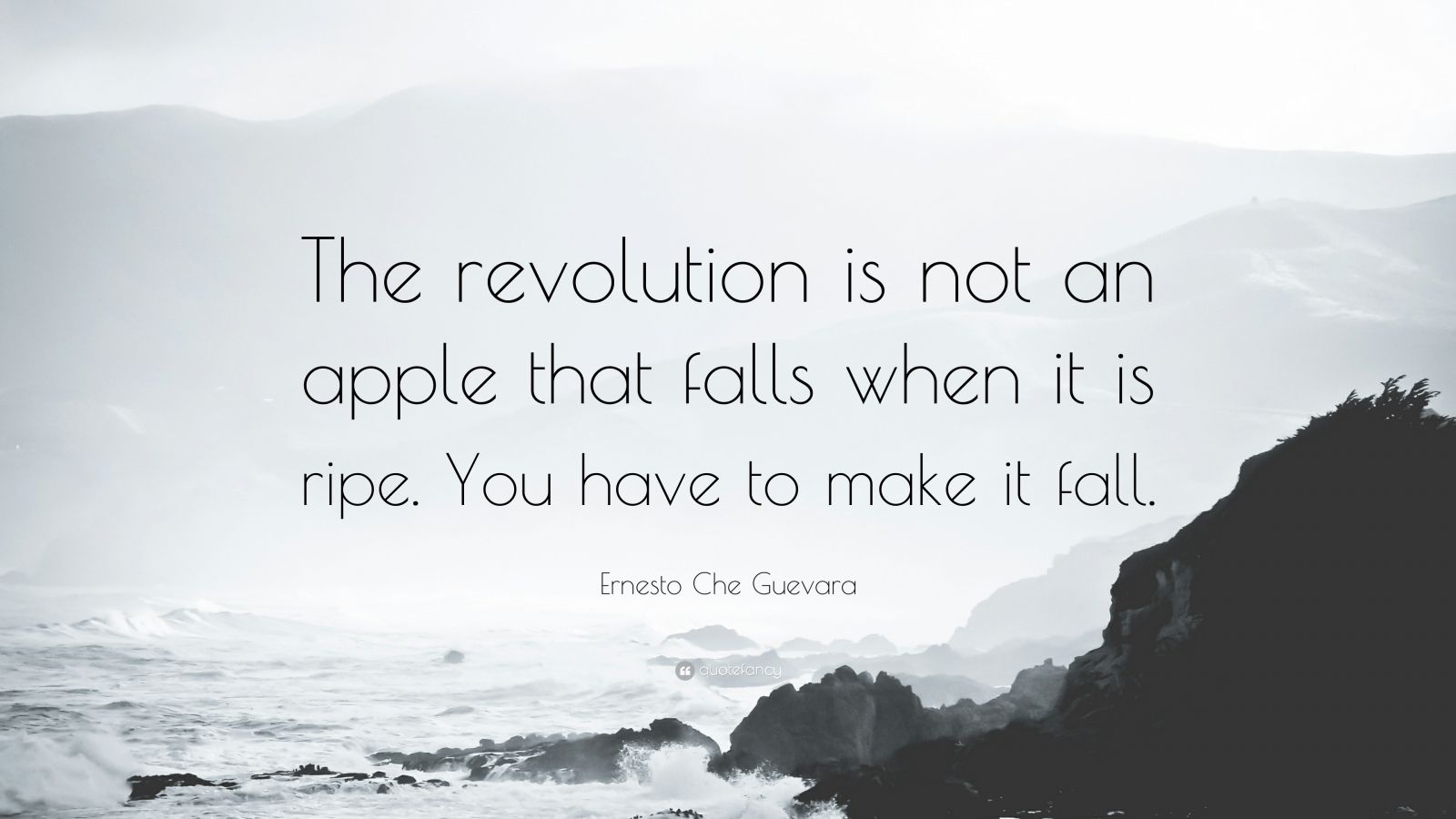
The other great voice of the twentieth century said: “The Revolution winnae faa intil yer haan like a ripe aipull. Yi mun mak it haapen!” Though to be fair to Che Guevara he said it in Spanish. Che’s revolutionary adventures were a bit of a catalogue of well-intentioned fiascos. The exception was Fidel and Raul Castro’s well-publicised and well-financed Cuban Revolution.
Image result for che guevara images
© quotefancy

The importance of Che Guevara’s example for us is his clarity of vision. Despite his privileged background he won the internal struggle within his own mind before moving on to influence others. Che took the personal responsibility for plucking his own apple from the tree of knowledge. “Nothing on airth enduris bot fame”, as they say in Inverurie.


In 1707 we retained control of all the important powers, levers and structures of a nation-state. The Kirk included social security, popular entertainment and much more. Our legal system included enforcement of law and the collection of taxes. The Scottish Exchequer exists in constitutional law, though it was illegally elided out of the deal by the Brenglish on both sides of the border. The education system in 1707 even had a couple of its own M.P.s. It regulated professions and put knowledge to work to defend our customs and ideals.

By contrast the smoke and the mirrors of devolunion are supported by all the imperialists, from raging to closet; the imperialists who suck the soul from our nation. When Norway voted for independence from the Swedish Empire it was a very poor country. What it had was a belief in itself and a clear vision of what constitutes a self-reliant community. There was no half-baked scheme to entrust their gold reserves to the Swedes. There was no time-share monarch, to be the servant of two masters. The Norwegians voted for a known constitution and then put in the hard work and sacrifice that builds a nation.

When the history of our times is considered by a generation as yet unborn they may well puzzle over Brexit. The sudden out-pouring of well-financed and carefully-polished lies must surely have had some purpose? Might it have been that the imperialists feared that bad-european-regulations widnae thole the protestant succession? The European courts would have been unlikely to rubber-stamp the blatant anti-Catholicism at the heart of the Brenglish monarchy. Have they sacrificed the economic security of the many over the aristocratic obsession with a family of their choice being closer to God than the rest of us? These ideas have no place in the constitution of Europe’s oldest nation-state. Just read the written exert from our oral constitution that is entitled: The Declaration of Arbroath.

Our opportunity to start a new verse of an auld sang canna be far awa. “Bigg thy hoose upon a rock.” We need to advertise our nation’s requirement for a monarch; a King, Quine or other gender of Scots.

“Even a great nation may fall, but only a contemptible one can be destroyed”; Staniswuf Stushits.

Bibliography
Josephus; The Jewish War; 1981; Penguin, London.
Linton, Abbot; The Declaration of Arbroath; 1320; Arbroath.
Sax, Jamie (ed); The Holy Bible; 160-;
Tacitus; Agricola;
Theroux, Paul; Dark Star Safari;
Zamoyski, Adam; Poland, a history;