Showing posts with label Scotland's independence. Show all posts

Thursday, 28 December 2023

Salvo's North-East Hub or The Brian Allan Show

 My purpose in writing this piece is not to cause distress to the Alec Salmond Fan Club. My reservations about Mr. Salmond are clearly expressed in Settler Watch Lynn and the Road to Devolunion; https://troostories.blogspot.com/. My purpose in this piece is to tell of a well-intentioned attempt to support the pro-independence claims of Salvo.

          By trying to make something work you find out more about it. After five months of frustrated effort I complained to the High-Heid Yins of Salvo about their organisational structure and the way in which it worked to waste the energy of anyone who genuinely believed that Scotland should return to the fold of sovereign nation states.

On the 7th May 2023 the Salvo Secretary, Jan Hendry sent an electronic document to those who had joined Salvo in an area from Dundee to Forres. This document was a call to form Salvo’s North-East Hub at a Meeting in Aberdeen. The document of 7th May had a draft constitution attached and a list of positions to be filled by willing Members.

          The Meeting was organised and overseen by Brian Allan who introduced himself as an activist with Aye Aberdeen. The Meeting duly appointed four office-bearers. Leigh Dubbels took responsibility for the Convener/Coordinator role; Wilma Bruce, Treasurer; Brian Allan, Membership Secretary; Louis Mair (author), Minutes Secretary.

          A few days later I looked in my in-box for the document of the 7th May as an aid to writing a draft minute. I found a similarly styled document dated 8th May. This document also purported to have come from Jan Hendry. The 8th May document had a significantly different list of office-bearers. No-one at the 9th May Meeting had mentioned these alternative posts. I wrote to the Salvo Secretary asking for clarity.

          Some days passed before Jan Hendry replied. I was told that my query had caused the Salvo secretary some confusion; the document had been composed and sent by someone else. My next attempt at writing the draft minute involved a more careful look at my electronic in-box. I found the 7th May document but when I opened it the list of Hub positions was not as I remembered it. My rough notes agreed with my memory. I asked a friend if you could alter an e-mail once it was in the recipient’s in-box. I was assured that this could not be done. I then wrote to Jan Hendry to ask for clarity. The Salvo secretary told me that the document had been edited. Jan Hendry was exceedingly vague about who had edited the document which looked like an e-mail but was not an e-mail.

          I cannot say with certainty who forged the 8th May document. I can however speak five languages and everything I know about literary criticism suggests that Brian Allan is the prime suspect. I cannot say with certainty who edited the 7th May document; once again I suspect that it was Brian Allan. My draft minute contains Hub posts that cannot be traced in the paperwork.

In June 2023 the North-East Hub’s Membership Secretary organised an admin-team meeting. Three of the four Hub Officers were present with a fourth figure by video conference. It was not clear what the Membership Secretary wished to discuss. The Convener/Coordinator was keen to tell me that she had given up the Convener’s duties and was now a Coordinator. It seemed probable that Leigh Dubbels had been schooled in this confused piece of thinking. I suggested that Miss Dubbels should resign from her post if she no longer wished to take the responsibility. I then asked Brian Allan what post he held with Salvo’s central organisation. Mr. Allan said, reluctantly, that he was a member of the “Core Group”. I had to leave to catch a bus, forgetting to ask the name of the lady on the video-link.

          Not long afterwards I learned that a Researcher had been appointed and her name was Dot Jessiman. This appointment was clearly not a Hub appointment. The name sounded familiar and I found it in a circa November 1993 newspaper cutting. A Dot Jessiman had been involved in a publicity stunt which benefitted Alec Salmond. In 1993 Alec Salmond had achieved favourable press reports in both the Scotsman and the Press and Journal over his association with New Scots for Independence. This hollow sham was fronted by Dot Jessiman. New Scots for Independence was never heard of again. Alec Salmond claimed to be leading the SNP towards Scottish independence. The Scotsman and the Press and Journal are virulently empire-loyalist newspapers. Dot Jessiman is currently a member of Alec Salmond’s Alba Party.

I was unable to attend the July “Admin Team Meeting”. It was around this time that Brian Allan claimed that he had become the ‘Chair’, presumably of the Admin Team.

           For the August Meeting the entire Hub was invited and an agenda was sent out by Leigh Dubbels. Item 1 on the agenda was the appointment of a Chair and a Secretary. This was achieved very promptly and the Meeting moved on to the kind of chaotic discussion that had been a feature of the May Meeting. The agenda was completely forgotten. Brian Allan gave the Meeting a long ramble about the need to copy leaflets given him by the central organisation. This led to the rapid appointment of two people who seemed to have known that this was coming. They were designated Chief and Deputy Clerk. It looked to me as though Brian Allan had created non-jobs for two of his cronies.

          In September there was a “Bonfire of the Vanities” night on the 18th. The Aberdeen clique around Brian Allan organised a bonfire on a river bank near the beach. It is a spot where people often light fires and no-one who saw it would have thought it unusual. I am not sure how many bonfires were lit between Dundee and Forres by the 400 Members of Salvo’s North-East Hub. I organised a bonfire on Tap o Noth, a prominent hill near Rhynie. I took a photograph of this fire and on the 19th September I shared my picture with the North-East Hub’s facebook page. My photo was approved for others to see by Brian Allan (Admin); on the 29th September. If you wanted to minimise the impact of a campaign that is how you would do it.


          In August I had attended a North-East Hub Meeting. The Hub appointed Dave Greig to the position of Chair. The new Chair was enthusiastic about his role which he saw as that of a secretary, much in the way that Brian Allan understood the structure of organisations.

          As far as I can re-construct the story of my exclusion from the September Hub Meeting it runs as follows: the Chair, Dave Greig, wrote an invitation to all Members to attend a Meeting on the 14th September. As he did not have access to the Hub’s mailing-list he entrusted his mailing to Brian Allan to send out. Dave Greig would have been pleased to receive a copy of his own mailing on the 11th, he would have had good reason to assume that Brian Allan had sent the mailing to all the Members.

           However Brian Allan had deleted my name from the mailing-list before informing everyone else about the Meeting. On the afternoon of the 14th September Brian Allan seems to have phoned Dave Greig to ask him to contact me by telephone to ensure that I knew about the Meeting. Brian Allan had my telephone number, Dave Greig did not. Brian Allan knew that I lived 25 miles away from Aberdeen, Dave Greig did not. Dave Greig sent me a text-message telling me about the Meeting, three hours before it began.

          I then phoned Dave Greig and was assured that I had been told about the Meeting by e-mail on the 11th September. I had been looking for something else on the 12th and knew this to be untrue. Ten minutes after the end of my call to Dave Greig I missed a call from Brian Allan. When I called him back he had nothing to tell me.

          By these Machiavellian manoeuvres Brian Allan could claim that I had been informed about the Meeting but I had chosen not to attend. To his lasting credit Dave Greig resigned from the position of Chair shortly thereafter. I have previously been involved with organisations which degenerated into cults of personality. They were always unable to pursue their stated aims.

          Salvo has a constitution which mentions a Core Group, two Guardians and a number of Stewards. How these people are appointed and the relationships between them are not available in writing. In practice without some unseen power in the background the organisation could not work. In pursuing the constitutional path towards independence, Salvo does not work.

          Salvo’s published material does not challenge the great lie about the Holyrood Assembly. There is no constitutional link between the colonial assembly at Holyrood and our 1706 Parliament. There is no link between the Holyrood Assembly and Scotland’s constitution. Tony Blair was being honest (for a politician) when he likened the Holyrood Assembly to a Parish Council. Mr Blair did not say ‘English Parish Council’ but his audience would have understood him; hopefully at least one hundred Scots will also understand him.

          The people I interacted with and learned about during my five months with Salvo’s North-East Hub were mostly supporters of Alec Salmond. The money to pay for Salvo’s expensive glossy leaflets may well be coming from the generous pension that a grateful Emperor of London pays to Mr Salmond. Like Aye Aberdeen, Salvo seems, to me, to be a hollow sham that will attempt to divert our energy into constitutional cul-de-sacs. Other similar new, improved and allegedly pro-independence organisations are springing up at an alarming rate. If you want to take part in a just struggle you should find out about them and be quietly and politely sceptical.

Tuesday, 21 February 2023

Edward Bruce; Will ye no cum bak again?

     As the dust has settled on Alec Salmond's 2014 independence referendum it is clear that we shall be held in colonial servitude for at least one more generation. Under the constitution of Unitedkingdomland a generation can be as long as they want it to be. It is time to re-appraise our strengths and weaknesses. A time to mull over historical episodes from our collective past and see if they might help us towards a future.

    On the road between Turriff and Banff there is a small village called King Edward. This was once a strategically important area. Robert Bruce captured and destroyed a Comyn castle in the vicinity. Edward Bruce was Robert's stronger and healthier brother. He claimed to be King of Ireland as part of a proxy war with the imperial power on our doorstep. Edward Bruce died in Ireland and Robert's daughter Margaret founded the Stewart dynasty. King Edward is a memorial to a man who could have been King of Scots.


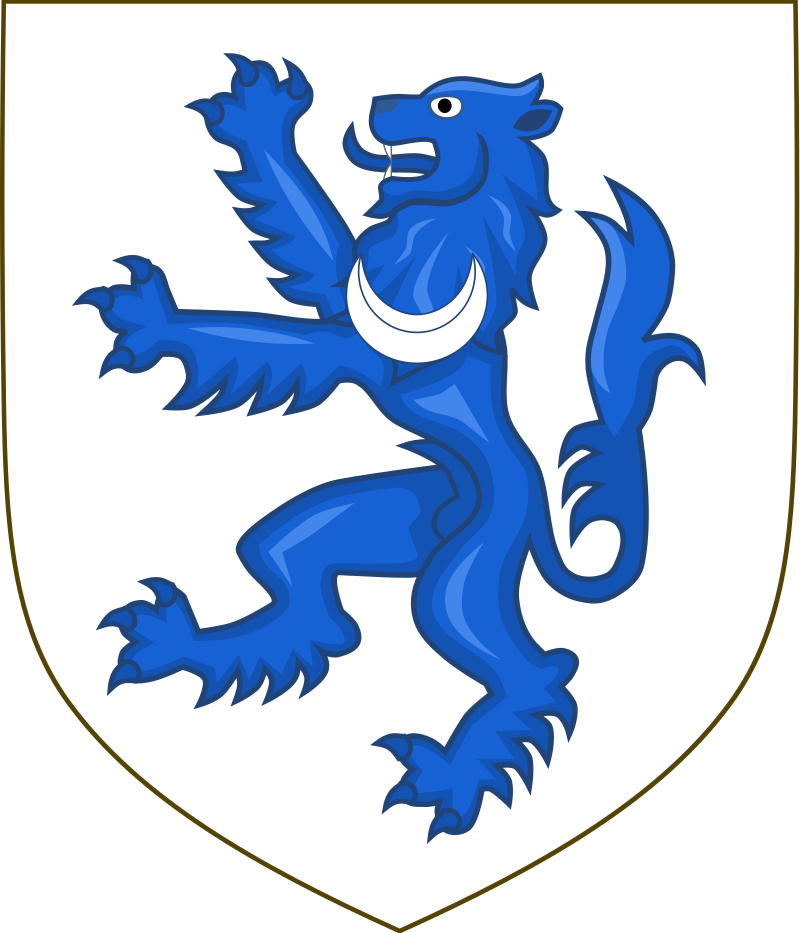
Edward Bruce's coat-of-arms
By MyChevalier - Own work, CC BY-SA 4.0, https://commons.wikimedia.org/w/index.php?curid=98554076

    Scottish diplomacy has been involved in Ireland in the past; it may be that Ireland is the stepping-stone to the survival of one of Europe's oldest nations. It is our clearly expressed collective will to have a closer trading relationship with the European Union. Any diplomatic and economic moves that strengthen our relationship with Dublin will be to our advantage. If we could contribute to un-doing some of the imperial mischiefs in Northern Ireland we would have achieved something worthwhile.

    By a happy coincidence, the collective will of the people of Northern Ireland is to have a closer trading relationship with the European Union. Much of Scotland's seafood exports go to the Spanish market, via France. If they could be re-routed through Ireland they would enjoy a less congested road network. Many other products might also find that the advantages of a Celtic route justified the cost of an extra sea crossing.

    It might also be possible for a confederal union between Scotland and Northern Ireland to work jointly towards an independence based on the 1689 Claim of Right. That is a single state under Scottish constitutional law. This might seem to be anathema to Dublin but the diplomacy is in the detail.

    For it to work such a regulatory union between Scotland and Northern Ireland would have to address the thorny problem of Irish unity. Scotland did have a try at being an imperial power but we were not greedy enough for that. Any extension of Scottish sovereignty into Ireland would need to be in a context that recognised the good sense and inevitability of Irish unity. Whether it takes 70 or 700 years the important thing would be to do the job to the best of our ability.

    It would not be unthinkable for the Scots to allow Stormont representatives to sit in a re-constituted 1706 Parliament. The Holyrood annex of the English House of Peasants might find it more difficult to gain permission from their imperial masters for such a move. If we are to have a future, the cul-de-sac of devolunion will have to be abandoned, at a time of our choosing. I would imagine that the Dahl, in Dublin, would be favourable to allowing Stormont representatives to take seats in their independent assembly.

    There is a possible scenario where Scotland and Northern Ireland move jointly towards a closer integration with the European Union; fully supported by the Republic of Ireland. The first steps would be to try to replicate as much of the Norwegian arrangement as we can.

    If we are to re-establish our sovereignty in our land we need to build alliances and cultivate friendships. We should be trying to enfranchise those Scots who are currently in exile for economic reasons. We also need to plan for a fully independent Head of State.

Edward Bruce will not come back again.

"But we can still rise now

And be a nation again"


Louis Mair 2023


Thursday, 4 November 2021

What Really Brought the Greenwash Gang tae Glaesgae?

Mr. Johnson and his puppet-masters could have associated climate-failure with almost any of the cities in their control. Belfast and Derry were not considered but why pick on Glasgow? The detail that catches my attention is the sub-letting of Scotland’s sovereignty to the U.N. London has made an internationally witnessed claim to having complete and unquestioned mastery of the Scots and the land that once was once their’s.

Since our talk-a-good-independence representatives began their march into the cul-de-sac called devolunion we have:

had our representation at Wastemonster reduced;

had our legal system subjugated to English imperial law;

had a serious challenge to any claim that the 1707 Union did not surrender our sovereignty.

All Under One Banner and similar organisations have been doing a good job. It is not enough to stop the rot. Constitutional affairs cannot be entrusted to politicians.

What constitutional insult are the neighbours planning next? Charles III of Greater England is currently having his media profile air-brushed and enhanced. In 1993 we briefly held the initiative and they were confused. We cannot just react to their provocations or accept their manipulations. There can be no nation without leadership.

Thursday, 19 August 2021

Can the Scots Really Understand the Evils of Imperialism?


The island of Jamaica has been portrayed to us as a tropical paradise. Happy, smiling black people are allowed to sing a chorus of “White folks been awful good to me.”;1 where they have a role in this imperial fantasy.

Xamaica, the Land of Springs, became a Spanish colony in the sixteenth century. The native Tainos or Arawaks spoke the same language as the Tainos on Cuba and Hispaniola. Under Spanish Imperial Law it was forbidden to enslave the natives. As with many things in imperialism this was propaganda and the actual practice was very different. There are no written records of Jamaican Tainos being rounded up and shipped to Cuba and Hispaniola; that would have been illegal.

There may possibly be a written record of Jamaican Tainos risking their lives to try to warn the Maya on the mainland of the threat from imperialism. The story of a canoe voyage from Las Islas Palizadas, on Jamaica’s south coast to the Yucatan Peninsula is told in History of the Conquest of Mexico.2

By 1655 the Jamaican Tainos had been fully assimilated by imperialism. Their memory had a place in history but it was more easily accessible in the mythology of the new Jamaicans. Their language was no longer heard in the Land of Springs. “... the end of a lang sang.”3


Jamaica's coat-of-arms shows fanciful representations of two Tainos; mis-leading images enslaved by an artist's brush.


In 1655 Jamaica acquired a new owner; a benign, enlightened owner; if you believe the propaganda. The English took over from the Spanish. England and Greater England (Scotland and Ireland) were under the benign and benevolent dictatorship of Oliver Cromwell. Seeking to bring the benefits of English civilisation to the entire Spanish Empire, Cromwell sent a large military force to the West Indies. This expensive expedition heroically wrested Jamaica from the embrace of the wicked Catholics. In 1655 Jamaica entered the English family of nations; a thoroughly dysfunctional and unhappy family.

In 1657 Cromwell's man in Jamaica formally invited 'The Brethren of the Coast' to establish their version of free-trade in Port Royal. These unsavoury characters have a somewhat sketchy historical profile. They were pirates to the Spanish whose shipping they preyed upon. Their most famous leader, Henry Morgan, was described as being Welsh. In the English of Wessex (the West Country) 'wales' means foreign. The designation of Welsh is open to interpretation and the name of Morgan is not unknown in the Scottish province of Buchan. Piracy was a well-established trade in Buchan long before Cromwell's time.

The English preferred to describe their pirates as privateers and also as buccaneers. The origin of this latter term is uncertain. If the Buchan free-traders had compounded the name of their province of origin with their privateering trade they might well have called themselves buchaneers. Deliberately mis-pronouncing every language (especially their own) seems to be a symptom of the imperial disease. From buchaneer to buccaneer is a linguistically simple sound-change. The alternative explanation is more complex.

In 1707 the English state underwent a fundamental re-organisation when it formed a federal union with the state of Scotland; henceforth to be known as Great Britain. In Jamaica the English imperial flag was embellished with a few patches of blue to become the Brenglish imperial flag. On the mainland the Spanish robbed and enslaved the Native Americans. From Port Royal Scottish pirates under an arms-length English/Brenglish administration robbed and murdered the Spanish. If you look closely at the spectacular ruins that are left by empires you will find that they are stained with blood and cemented by despair.

The 1707 Brenglish imperial flag is constitutionally related to a state called Great Britain.


Concentration camps are generally thought to date from the 1860s. Their invention is credited either to the 'bad Spanish' empire in Cuba or to the benign, enlightened “Brutish Empire” 4, under great provocation, as a temporary measure, in Natal and Orange Free State, during the Boer War (1899-1902). Many Jamaicans believe that the first concentration camp was the island of Jamaica. At 100 miles by 50 miles it was also the largest.

The first African slaves in Jamaica were imported by the Spanish. Their descendants are the Maroons (from Cimarrones) of Jamaica's semi-desert interior. The English initially preferred to use people they described as bonded-servants to do the kind of ”Carry Go Bring Come”5 tasks that are beneath the dignity of imperialists. These people were from diverse backgrounds and anyone could volunteer for bonded-servitude which is also known as indentured-service. In reality bonded-servitude, a form of slavery 6, was used by deep-soothers to thin out the Celtic over-population of the north and west of England and other barbaric parts of 'ouwa islands'. They were really doing them a favour as they were incapable of supporting themselves; or so they said.

Many bonded-servants died on the passage to their new home on the Island of Springs. Once they arrived they were hard-working and cheap to keep. They had a bad habit of dying from tropical diseases; probably made more deadly by malnourishment and despair. By the end of their seven or eleven year bonds they were thoroughly acclimatised, addicted to rum and ready to join the pool of cheap labour in their new home. That was true for some but many had been promised that the bond-holder would pay for their passage home if they should survive their period of bonded-servitude. How convenient for the bond-holders if their servants should succumb to the effects of over-work, brutality and mal-nourishment shortly before the period of bondage was due to end. In this crucial detail the bonded-servants were in a worse position than the African slaves who were to replace them as the lowest strata of the English imperial class-system.

Although the use of Celtic slaves had many advantages in the building of England's tropical paradise, there were also many disadvantages. The high mortality rate was a serious drawback, many of them didn't live long enough to repay the cost of shipping. Wouldn't it be enlightened and inspired if we were to breed a race of servile people who had the meek and fatalistic qualities of the Celts combined with the psychological toughness and resistance to tropical diseases of West Africans?

Ideas of this type were not entirely good news for the Celts but they were certainly bad news for some of the peace-loving nations of West Africa. English domination of shipping and the West African trading-posts allowed them to control the supply of African slaves to their American colonies. Jamaica became a sorting-office for this lucrative trade. The Celts still had a place in the imperial plan. They became the plantation underseers who taught the Africans how to be productive members of an enlightened, christian empire. The Celts were still slaves (though one should not say so to their face) but they had now moved up one class in the imperial plan.

The task of turning the new recruits to the imperial plan into a productive and profitable work-force was complex. They had to be persuaded to give up their languages, cultural beliefs and sense of values. In return they were given a place in the civilised world of English-speaking imperialism; and a new name! Some Africans went along with 'cultural assimilation' while others resisted. The more humble and co-operative blacks tended to be considered ideal for onward shipping to other markets, including the American colonies. The selective-breeding programme in Jamaica, probably without realising it, was selecting for a rebellious, culturally-confident lower class of Jamaicans.

When, in 1776, a small group of trouble-makers temporarily withdrew the American colonies from the 'family of nations' the ever-patient mother-country still controlled all the shipping and access to foreign trade. There followed (until 1812) a period of benign and enlightened guidance to steer the American renegades back to the right course. The shipping of assimilated Africans from Jamaica continued for many years. At least 160,000 Africans were thus trans-shipped through Jamaica.7

The moral depravity inherent in this sad tale is difficult to evaluate; impossible to understand. The achievements of the Nazi regime in Greater Germany lasted for 5½ years. The imperial regimes in Jamaica lasted for 400 years; “400 years of the same philosophy”8. They have left a moral and cultural legacy that causes Jamaica to stand out among all the small nations of the world. Jamaican contributions to world music and track athletics are out of all proportion to the small size of the island's population.

The Celts, many of them Scots, who were caught up in this holocaust have contributed to the island's rich and restless heritage. Jamaica's flag is a saltire flag. Many Jamaicans have Scottish surnames. There are still communities on the island who see themselves as being of Scottish extraction9. Much of the power in the lyrics of Jamaican popular songs comes from their understanding of the evils of imperialism. Peter Tosh (Mackingtosh), Justin Hines (Innes), Bunny Wailer (Livingstone) and Prince Buster (Campbell) all make worthy attempts to describe and evaluate the imperial wasteland. The Honourable Marcus Garvey10, Jamaica's national hero, ranks alongside The Holy Prophet Mohammed in his contribution to shaping African cultural identity.


"My coat is Scottish, my name is Irish but I am an African." Marcus Mosiah Garvey 1887-1940

The problem the Scots need to overcome is that they are too close to the trees to see the wood. The empire that tortured and tormented 26-counties-Ireland for seven hundred years has broken and ignored the spirit and the letter of the 1707 Treaty of Union. In 1973 when Scotland, willingly, entered the European Union our legal system was not subordinate to a Brenglish High Court. There is no moral or legal reason why we should accept subjugation to English Law today.

The Empire-Loyalists who claim to be 'Unionists' will have a template for federalism; if they ever bother to read the 1707 Treaty. They could campaign in a positive way for the opening of The Scottish Exchequer; a provision of the Treaty. The oral propaganda that was the context for the signing of the 1707 Treaty is, in Scots Law, something they could bring before the courts. True Unionists, if they were serious, would be campaigning for the closure of the English Parliament and the, long-delayed, opening of the British Parliament, in York.

The talk-a-good-independence-at-election-time factions get a good press from the imperialists. They have set themselves up to repeat the history of the talk-a-good-socialism-at-election-time faction. If we are to have years to wait for the next step they should be years of planning, organising and hard work. The Americans, the Irish and the Jamaicans all gained their independence from the same evil empire. If you think it was easy you are not fit to live in a sovereign state.


REFERENCES

1 Harriet Beecher Stowe; Uncle Tom's Cabin;

2 Bernal Diaz del Castillo; History of the Conquest of Mexico; many translations; look for Yucatan Peninsula in the index

3 “That is the end of a lang sang”, was a contemporary comment on the 1707 Treaty of Union. I associate it with Fletcher of Saltoun but can find no reliable confirmation of this.

4 Stokely Carmicheal; attribution from Mark Kurlansky; Nonviolence 25 Lessons from ...; Random House; 2006; p. 169

5 Justin Hines (aka Justin Hinds); Carry Go Bring Come; Island Records; 196?

6 Eric E. Williams; Capitalism and Slavery; 1944

7 C. E. Long manuscripts; official records of human-trafficking into and out of Jamaica from 1702 to 1787; published by, Jamaica Family Search

8 Peter Tosh; 400 Years; Blue Mountain Music Ltd;

9 Ian Thomson; The Dead Yard;

10 Stanley Nelson; Look for me in the Whirlwind; Firelight Media; U.S.A. 2000

Amy Jacques Garvey; Garvey and Garveyism; 1935

Féderico García Lorca; The King of Harlem (Poet in New York); many translations; first published in 1940 as El Rey de Harlem


Monday, 21 October 2019

Barriers in the Sea


I find it strange that the media are discussing the idea of a customs barrier in the Irish Sea as though it was something new and completely unprecedented. Our partner in the 1707 Union, the Parliament of England, has operated a customs barrier in the North Sea and the North Atlantic for many years. I am referring to the customs barrier that separates Scotland from an area known as the United Kingdom Continental Shelf.
Every worker or piece of equipment that makes the journey from Scotland to an oilfield installation off our coast, crosses this customs barrier at the 12-mile-limit. Workers carry passports and equipment clears customs as it leaves (or enters) Scotland.
Our partner in union traded away the “expendable” fishing grounds but they are keen to retain control over the oilfields. Their misuse of the term ‘United Kingdom’ has become so routine that it is perceived as being an ancient usage. Yet it has only become fashionable in the past half-century. The name of the 1707 Union as a federal state was and is Great Britain. It is a state composed of two nations and the Duchy of Cornwall. Wales was incorporated into England by military conquest a long time ago.
England’s attempts to subdue and incorporate the entire island of Ireland (Lesser Britain to geographers) have proved to be a deferred success. These imperial adventures gave rise to the 1801 Union and the name of United Kingdom of Great Britain and Ireland. This was abbreviated to ‘Great Britain’ or ‘Britain’ until the 1970s. The 1801 Union was a fraud entered into by the ‘Parliament of England’ and a colonial ‘Parliament of Ireland’. The treaty is drafted so as to be in clear breach of the 1707 Union which constituted a single Parliament of Great Britain.

The 1707 Union Flag

If we are to proceed towards a meaningful and stable independence we will need to know who we are negotiating with. We will need to know who the competent parties to the negotiations are. We must try to set out our stall so as to make the terms and conditions that end the 1707 Union difficult for our former partner to wilfully ignore or imaginatively misrepresent.
If we stick to the two equal states model of the 1707 Union things will be complex enough. If we admit any little Englander fantasies such as the ‘Rest of the United Kingdom’ we could open the door to a Welsh solution. The Old English word ‘wales’ means ‘foreigner’. If Scotland shoulders an equitable and agreed proportion of the debts of Great Britain we would be taking a first shaky step towards a more dignified and adult future.
If Scotland takes on a fair share of Great Britain’s debts and liabilities we underline our moral and legal claim on the assets and equity of Great Britain. This seems to me to be essential if we truly aspire to take on the tricky business of recovering from the Darien Disaster. By claiming stewardship of the Parthenon Stones, The Malvinas, Gibraltar and Albania’s gold we would announce to the world that we are serious.

Image result for european union flag image
The European Union Flag in October 2019

It is to be hoped that the continuing state of England would see the wisdom in returning to us the Book of Deer, the Burghead Bull and the Cutty Sark. However that would be up to them. If they really wanted to make a pacific gesture there are Berwick and Cumberland to consider. They might offer to take the old nuclear submarines away from Rosyth; but I’m not holding my breath about that.
Another approach to our resumption of all the outward trappings of sovereignty would be to start at the top. If we revoked the 1603 Union of the Crowns the constitutional muddy water becomes much clearer. We could then lay claim to the Koh-i-Noor diamonds. The fake coronation stone would, of course, be returned to us under a treaty obligation from auld lang syne. If our former partner was being level-headed and well-intentioned they might also return the Bishop’s Chair that was stolen from Scone Palace. But I’m not holding my breath about that.